
Start Your Day in Muse
Get one morning summary of what needs attention across every company, without opening LedgerHQ.
 LedgerHQ
Built for bookkeepers
Run your bookkeeping practice from onboarding and billing through full ledger management, all in one system.
CRM + Onboarding · Tally · Complete Books
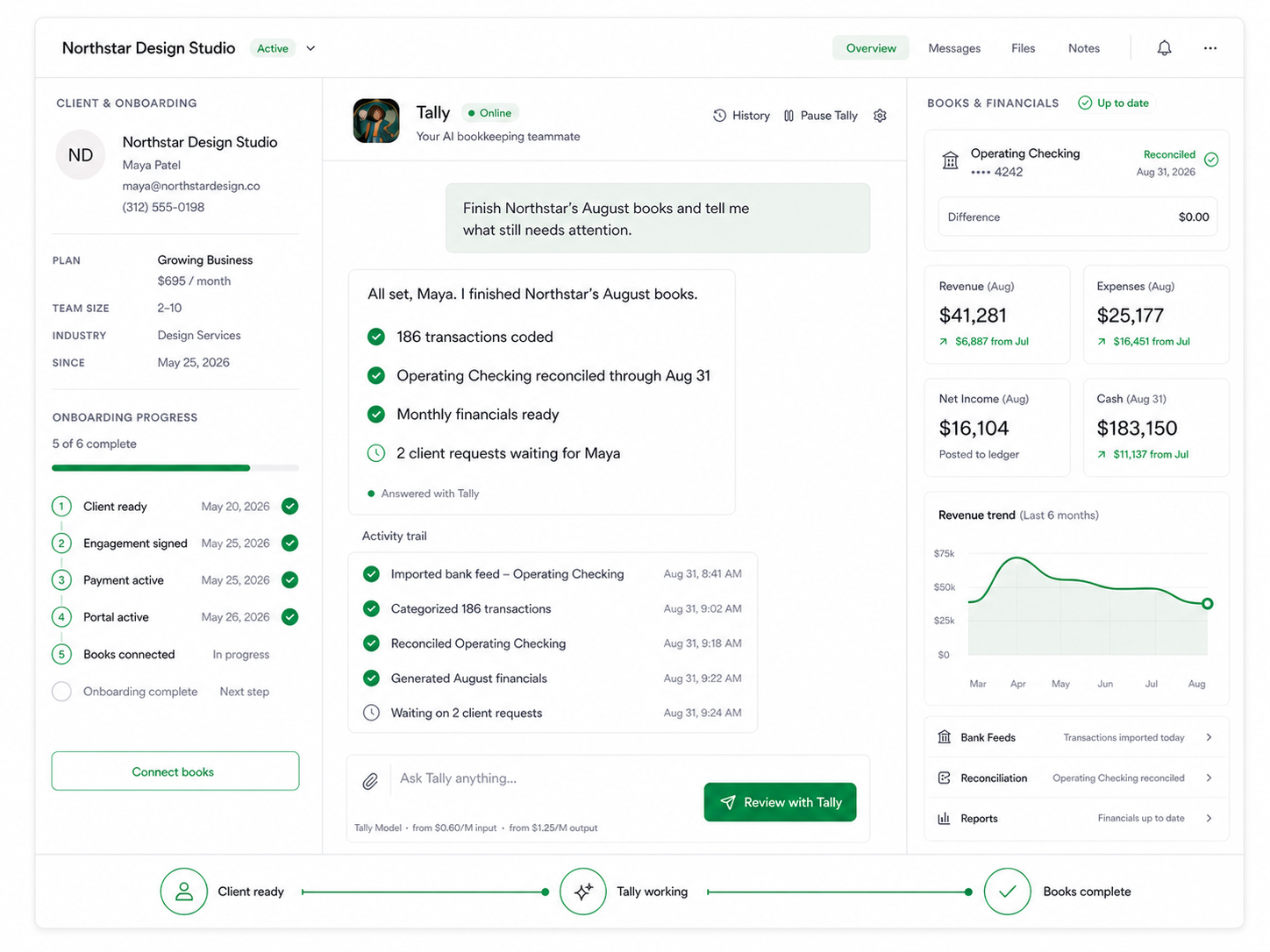

Get one morning summary of what needs attention across every company, without opening LedgerHQ.

Tell Muse what you need. It works through each company and brings back the result.

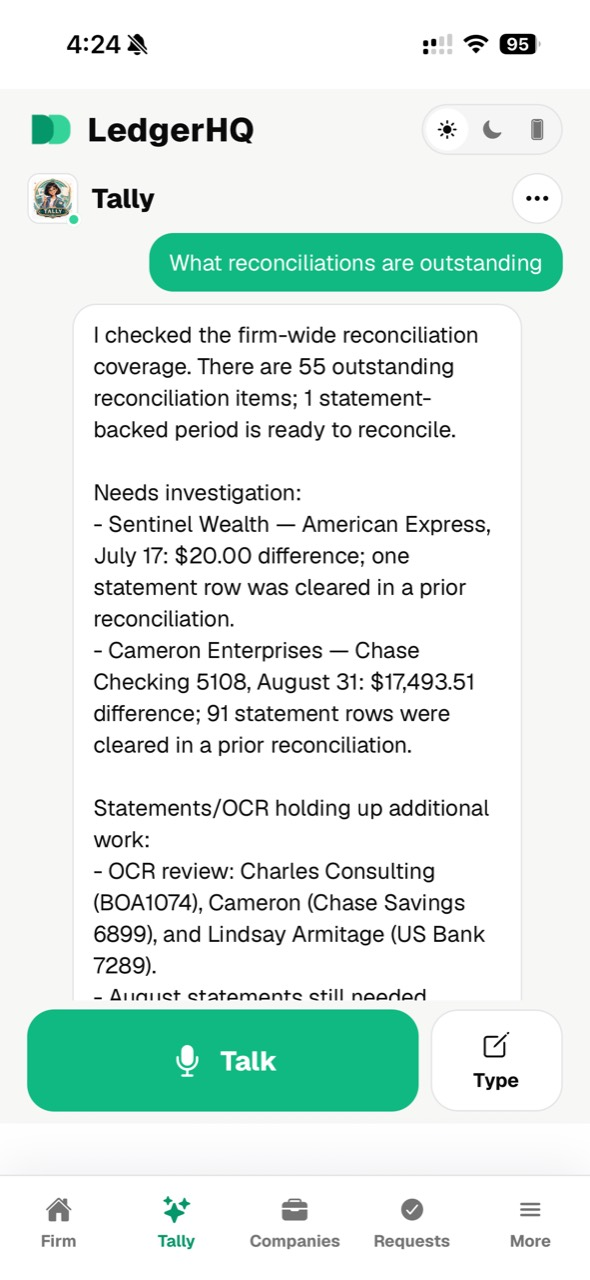
Bulk code transactions, find missing reconciliations, and send Muse to investigate.

Have Muse send the financials as soon as the reconciliations are done.
Free video series
Three chapters. Six videos. One operating model for the firm ahead.
2 videos
2 videos
2 videos
 Video 05Set Up GrokBot and Connect LedgerHQ
 Video 06Build the Ten Firm Automations
Meet Tally
Tally does more than answer questions. She codes transactions, works reconciliations, follows up for missing information, and prepares the financials. You stay in control of every judgment call.
Everything Tally can doAre April’s books ready?
Almost. I coded 184 transactions and reconciled all four accounts.
One $3,200 transfer needs your call. Was it an owner contribution?
Yes, owner contribution.
Done. April financials are ready.
How Tally works
Connect the banks or bring your history. Everything lands in one set of books.
She codes, reconciles, posts routine entries, and follows up for what is missing.
Review the judgment calls, then use the reports while the numbers still matter.
Today’s books
The product, step by step
Watch the work move from one clear step to the next, with Tally carrying the details forward.
Bank activity
Tally codes the familiar activity, keeps the source beside every transaction, and brings forward only the calls that need your judgment.
See this part of LedgerHQCompany follow-up
Tally asks for statements, documents, and explanations. When the answer arrives, she uses it and continues the work.
See this part of LedgerHQReconciliation
Tally works from the stored statement, clears the matching activity, and leaves the remaining difference in plain sight.
See this part of LedgerHQTally matched 126 transactions to the statement and kept the source attached.
Financial reporting
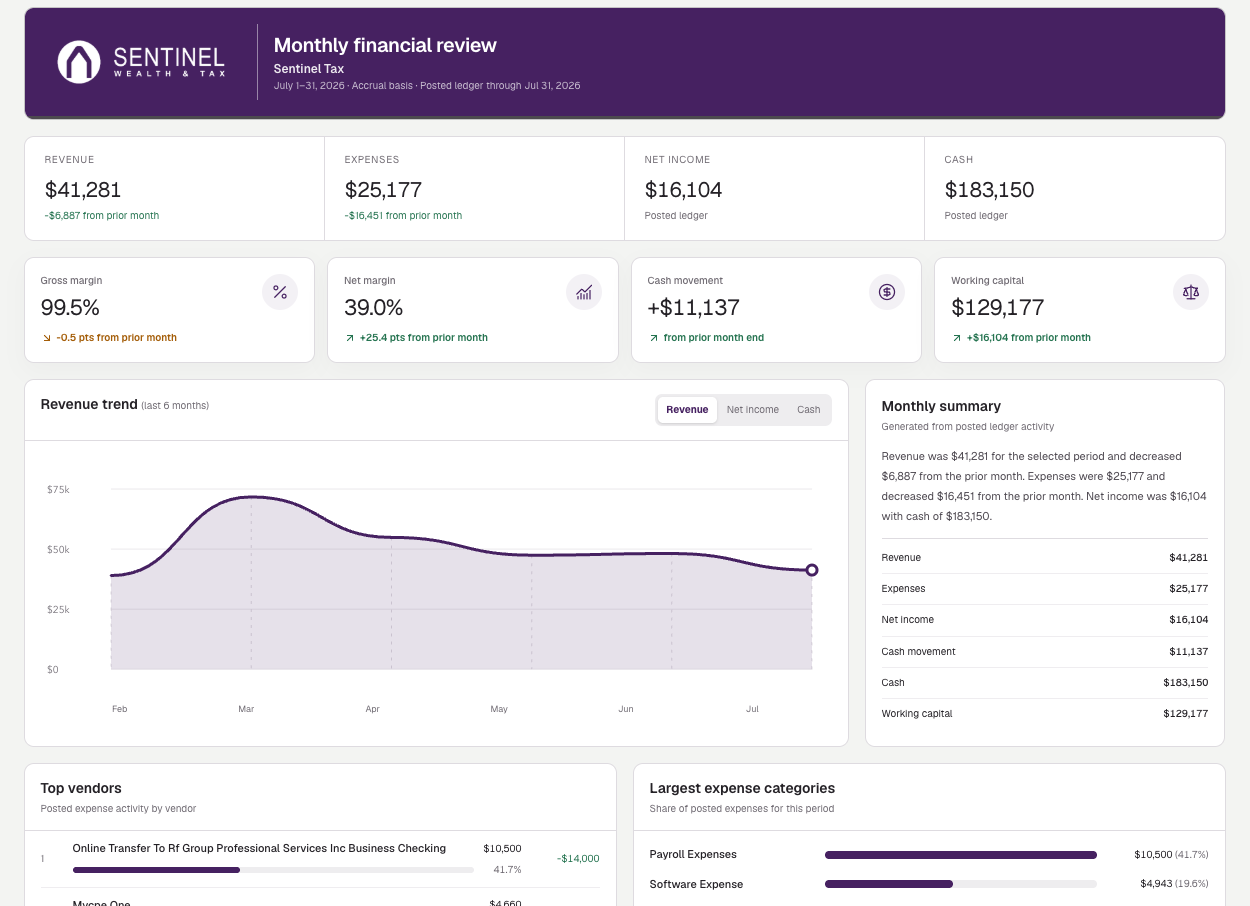
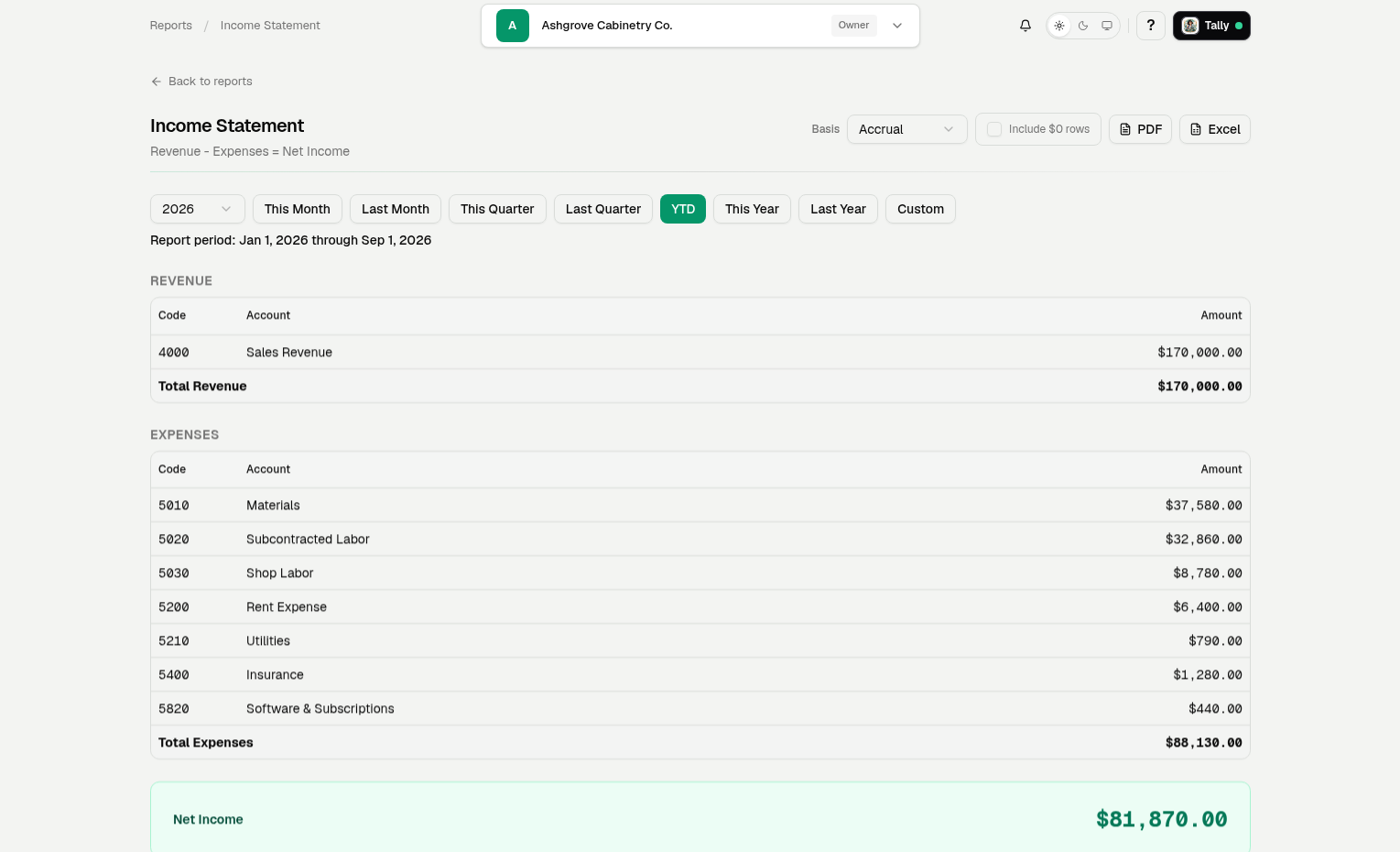
Revenue, expenses, cash, margins, vendors, trends, and the financial statements arrive in one review that is ready to share.
See this part of LedgerHQPricing and onboarding
Show clients exactly what you offer. They choose, sign, pay, and start onboarding in one connected experience.
See this part of LedgerHQ
Engagements and billing
Build the engagement, collect the signature, save the payment method, and bill the right package on schedule.
See this part of LedgerHQ
See it happen
See the coding, reconciliation, follow-up, and reporting happen inside the books. The product is the proof.
Watch every walkthroughInside LedgerHQ
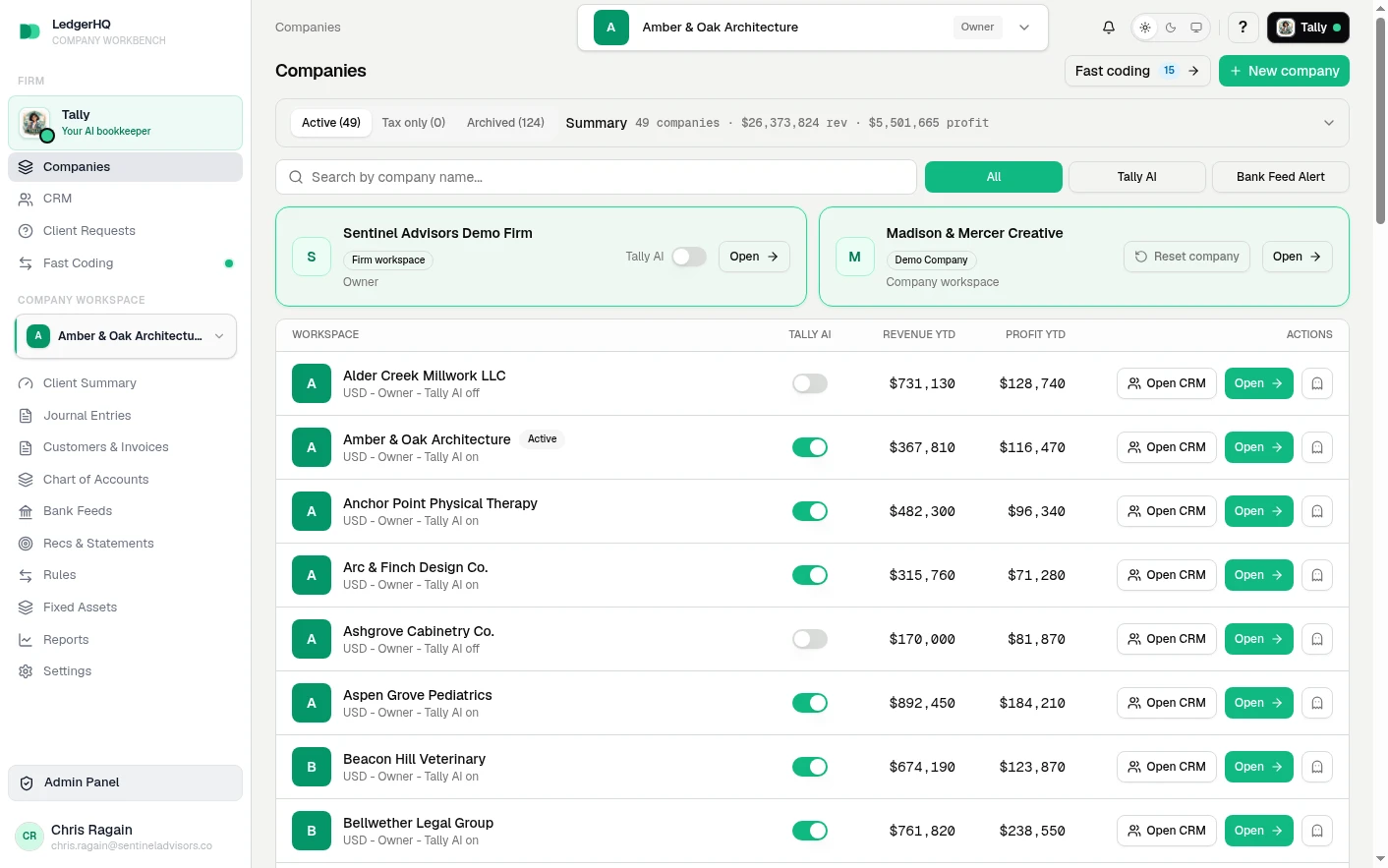
One quiet place for the books, the work, and the financials that come out of them.
Monthly review
What changes
QuickBooks gets the bank activity in. Tally handles the bookkeeping that comes next and leaves you the calls that need judgment.
See the full comparison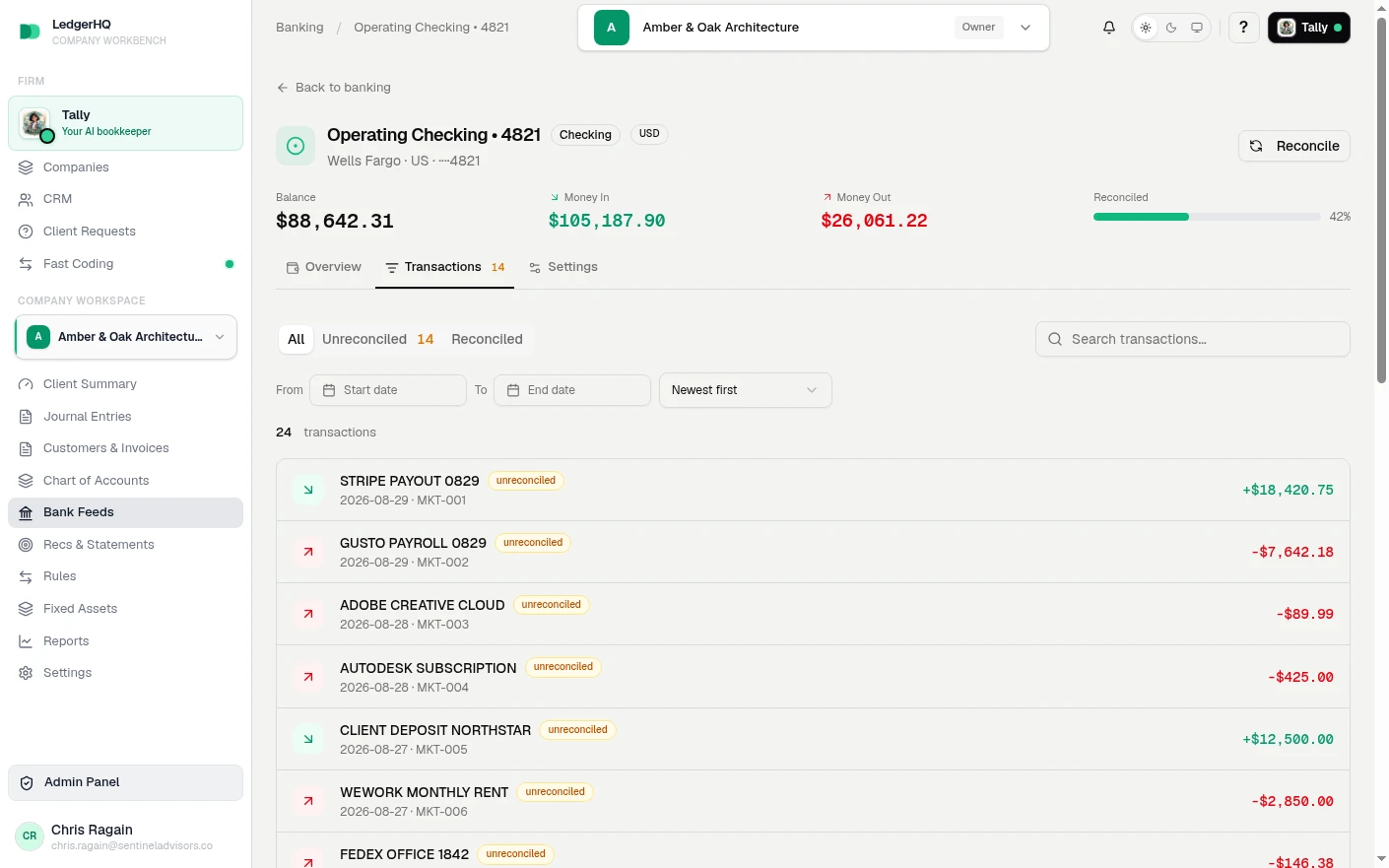
 QBOLedgerHQ
Your tools can join in
Connect Codex, Claude, an internal script, or another business system to the same books. Each one works within the companies and permissions you choose.
See how agents connect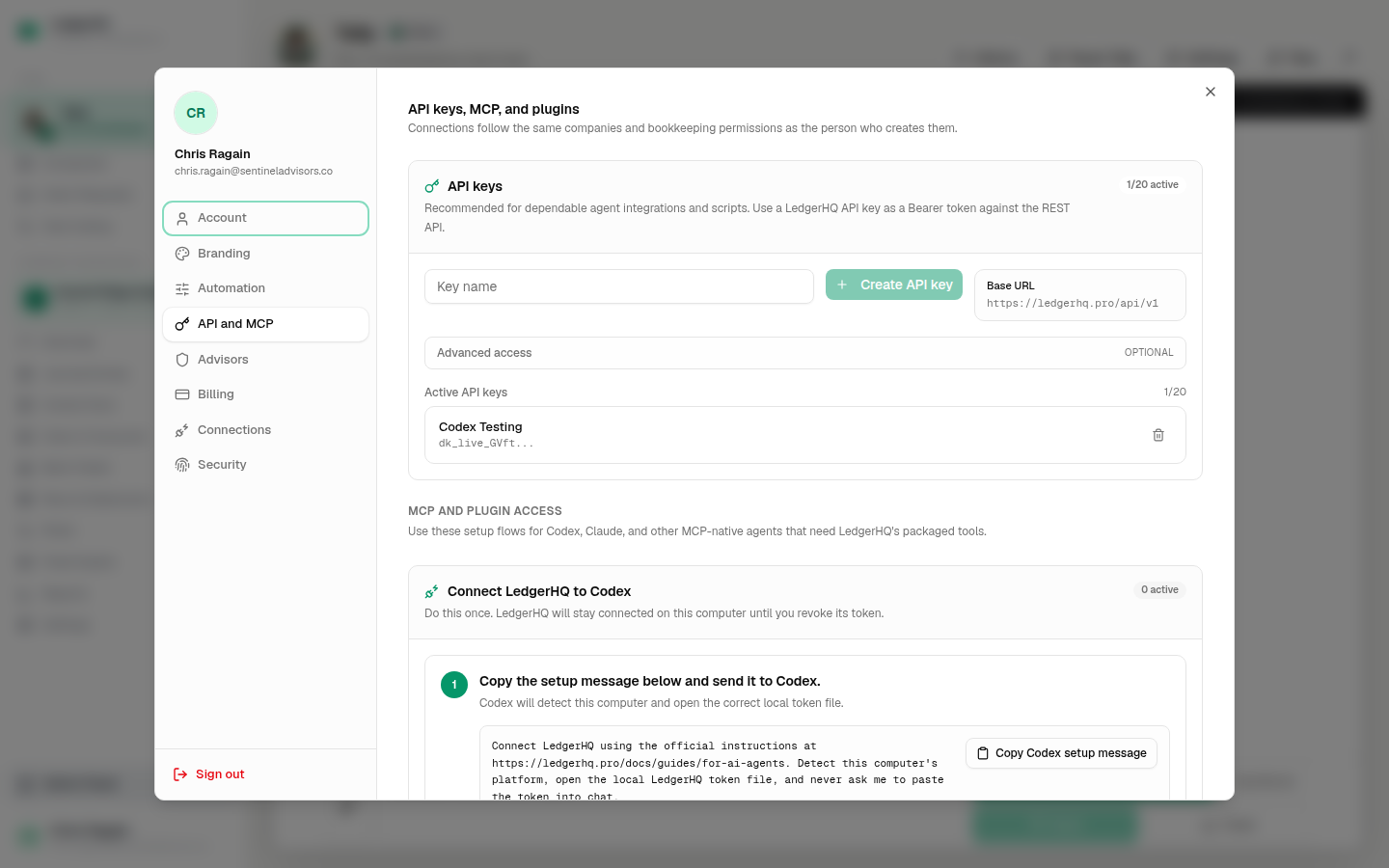
Which books need my attention today?
Three companies need a judgment call. I can handle the rest.For accounting firms
Pro adds the firm workspace, requests, company-owner access, and a team working across every company you manage. The software, Tally, and price stay the same.
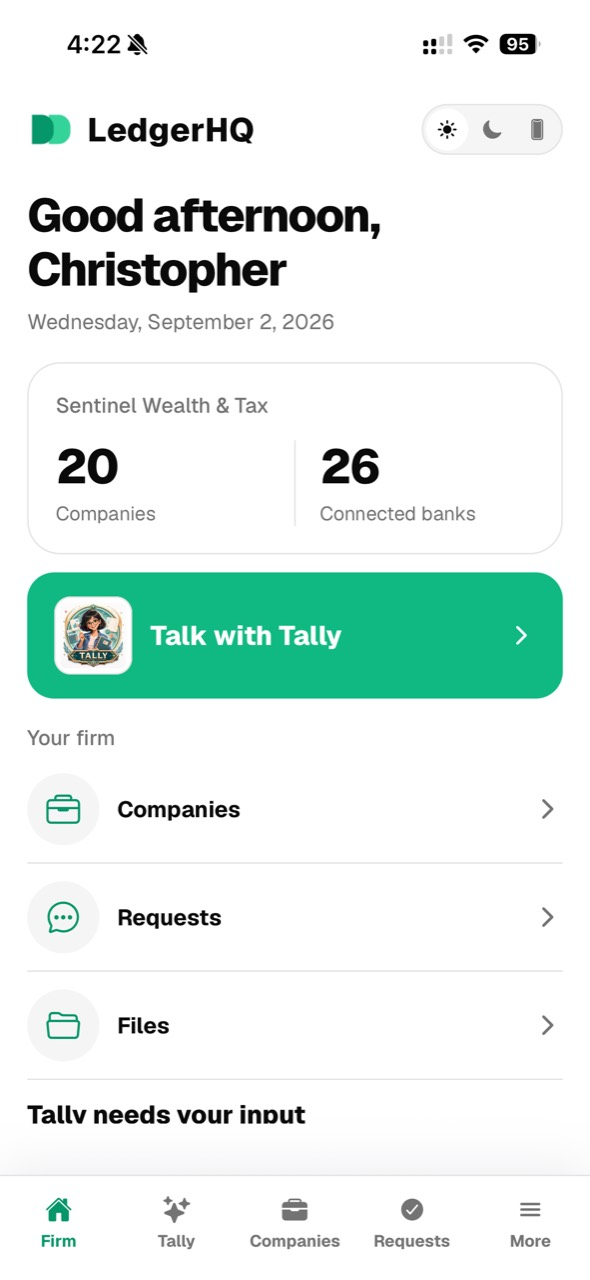
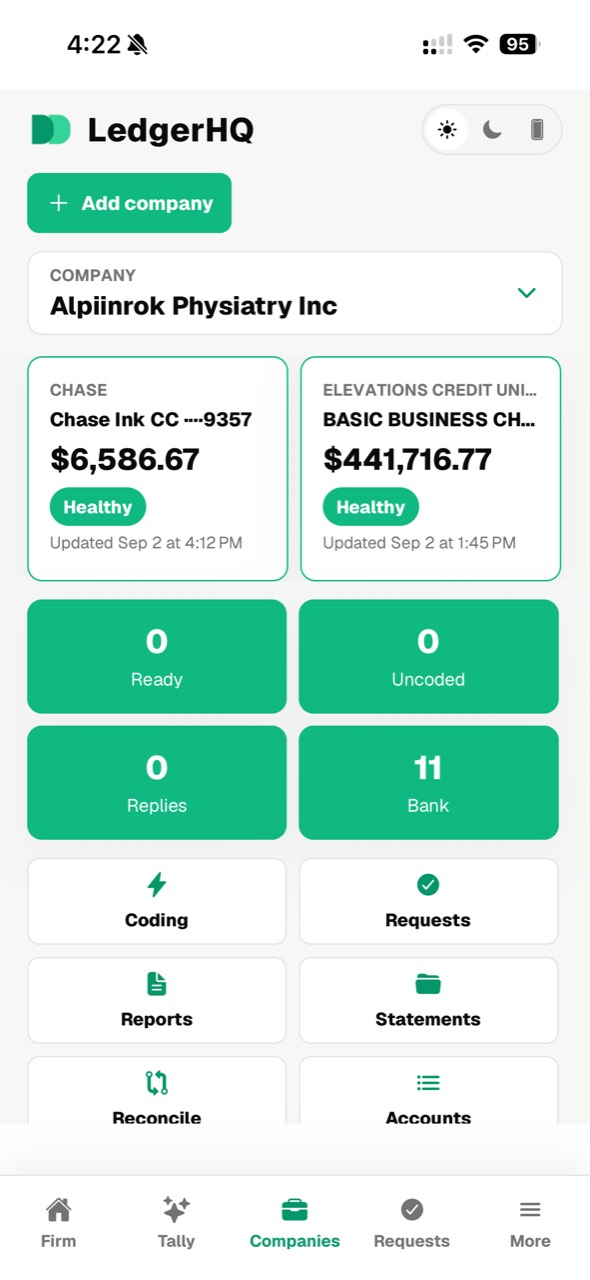
LedgerHQ on iPhone
Ask what needs doing, open a company, review transactions, pull reports, and answer requests. Business owners get their own view of their books.
Moving is included
Your history comes with you. Move one business or the whole firm, and run LedgerHQ alongside QuickBooks for a month if you want.
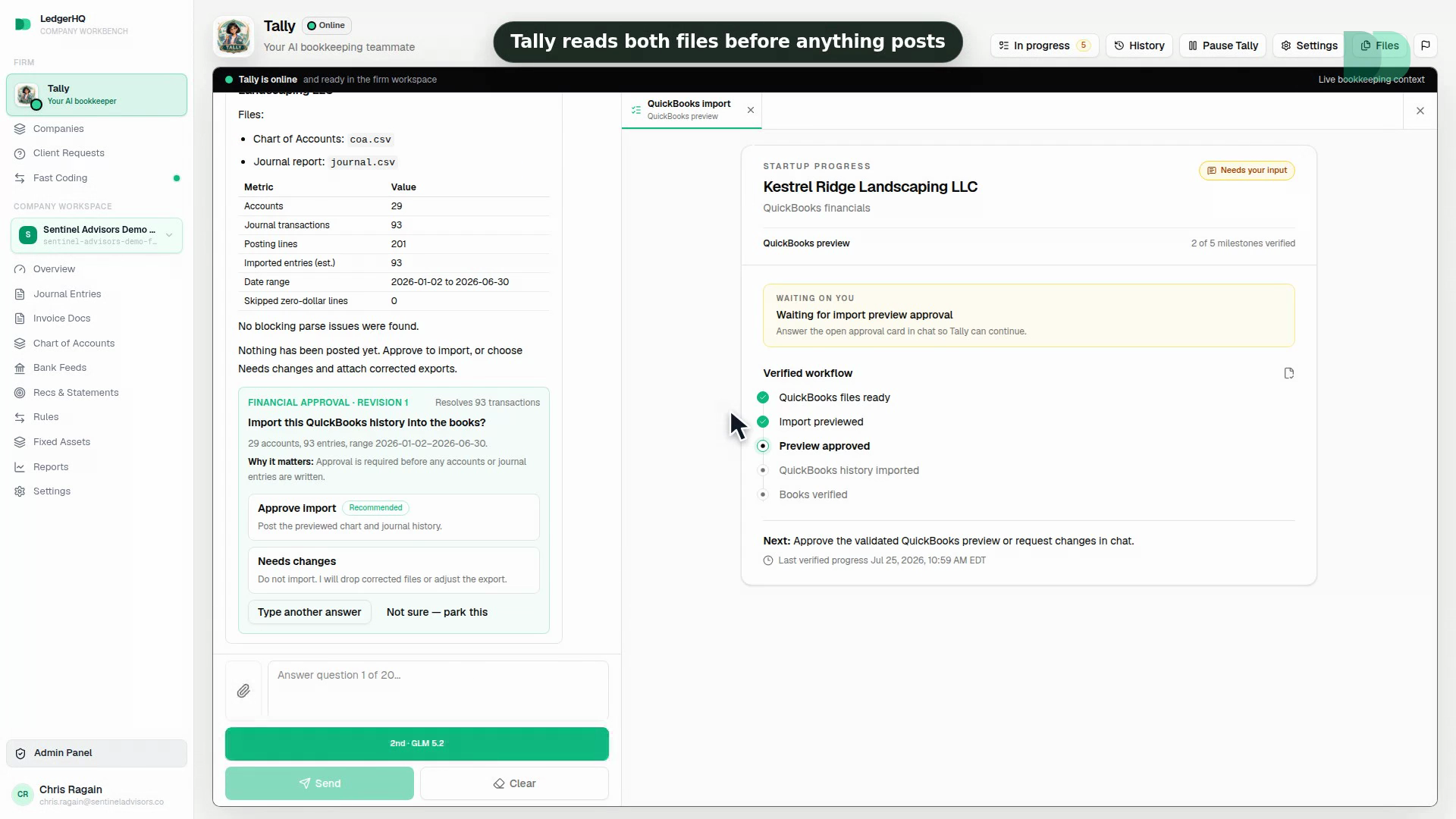
Your chart of accounts and journal history come with you.
LedgerHQ previews the import so you can verify the books first.
New activity starts flowing in for Tally to work.
Send the exports you have today. LedgerHQ brings the history in, checks the result, and tells you when the books are ready. Most complete packages are done in one to three business days.
Security and AI data
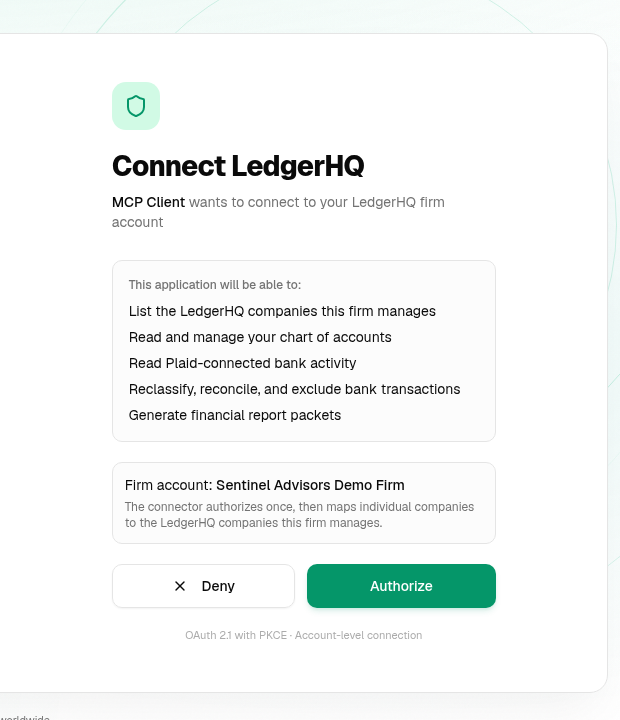
LedgerHQ does not use customer books to train models. Access stays scoped to the company and every action stays attributable.
How LedgerHQ protects your booksCustomer books are never used to train models.
People and agents reach only the companies they are allowed to use.
Railway and Plaid have completed SOC 2 Type II audits. LedgerHQ has not yet completed its own.
Questions, answered
Bookkeeping software with Tally, an AI bookkeeper, built in. She works inside your books and hands you finished financial statements.
Both. It is the same software and the same $20 price. Pro adds the firm workspace for every company you manage.
QuickBooks brings transactions to a screen. Tally codes them, works the reconciliations, follows up for missing information, and produces the financials.
Yes. White Glove migration is included. Send the exports you have today and LedgerHQ will bring the history in and check the result.
$20 per month for each business you add. Tally’s AI use is included, with no contracts.
Everything in one package
Start with a card today and pay nothing until January 1, 2027. No contracts. Tally’s AI use is included.
Start Free


